President Milliken shares a postcard from Santa Barbara
Share This Article

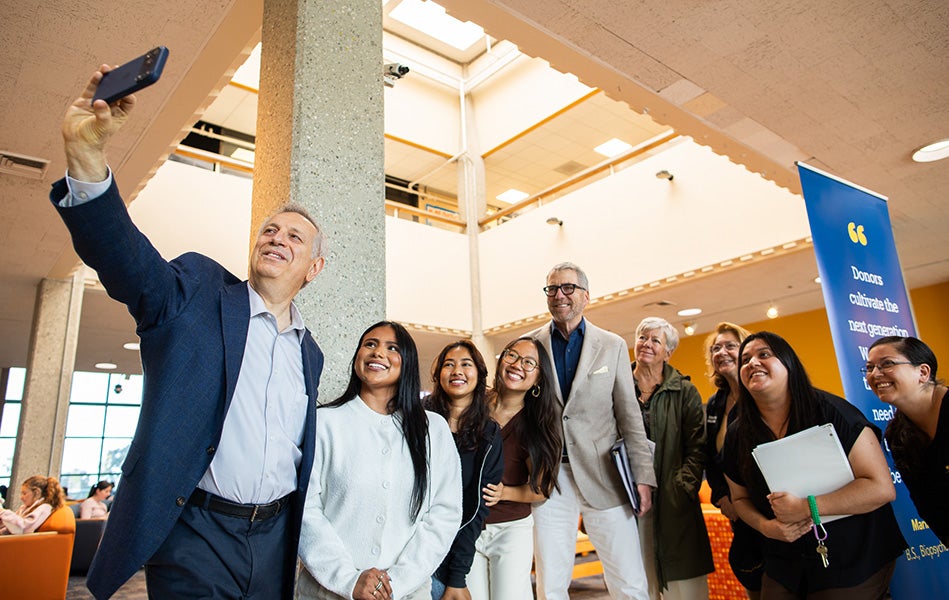
Since starting as president of the University of California last August, much of my time has been consumed by the federal issues impacting the university and its students, faculty, and staff. As you may expect, these national shifts have kept me farther from our campuses than I would like. But I’m very glad to report that I had the pleasure of visiting UC Santa Barbara last week. I’ve been able to spend some time on almost every UC campus, but this was my first official stop on what will be a systemwide engagement tour.
UC Santa Barbara is a magical place. The campus sits on a coastal bluff above the Pacific Ocean. For the history lovers out there, UC Santa Barbara is a converted WWII-era Marine Corps air station. It’s an incredible spot to go to school and a place worthy of traveling the world to see. My only regret was not knowing about it when I went to college.
I wanted to share some brief reflections from my visit.
One of my top priorities as president is ensuring UC students have their basic needs met. Food security, affordable housing, and medical care especially come to mind. I had a chance to meet with students at the Associated Students Food Bank. Last year, the food bank served more than a fifth of the student population and distributed more than 300,000 pounds of food. It’s a remarkable operation that directly supports student success — not just as a social service — but as infrastructure for retention and academic achievement.
UC Santa Barbara is no. 1 in the country for granting bachelor’s degrees in physics, per the American Institute of Physics. It’s also a quantum computing powerhouse, home of the National Science Foundation Quantum Foundry. With over 30 industry partners, including major collaborations with Google’s local quantum AI lab in Goleta and Microsoft’s Station Q on campus, the Foundry is a first-of-its-kind operation in the U.S. Backed by a $25 million federal grant, faculty from across scientific disciplines are finding and building the physical materials that make reliable quantum computing possible.

This is advanced technology that can be used for drug discovery, cybersecurity, sustainable energy storage, and more. Students and local industry are essential to this effort, working side-by-side on everything from atoms to applications. It’s exactly the sort of collaboration that’s contributing to our economy and seeding the next generation of scientific breakthroughs.
I was also struck by a conversation with faculty about how AI is reshaping research and teaching, including in the humanities. Students have their own questions about where and when it’s appropriate to use AI and many have concerns about cognitive offloading, a term illustrating how AI reduces the amount of thinking required for certain tasks.

At a moment when many universities are scrambling to react, UC Santa Barbara is asking the right questions: how AI is impacting the student experience, what this generation of students needs from their universities, and how institutions like UC must adapt to meet them.
Other highlights of the day included lunch with sharp, engaged, and curious students from the Chancellor’s Student Council and meeting the Gauchos baseball team. They welcomed me with a jersey of my own. Number 22, naturally.
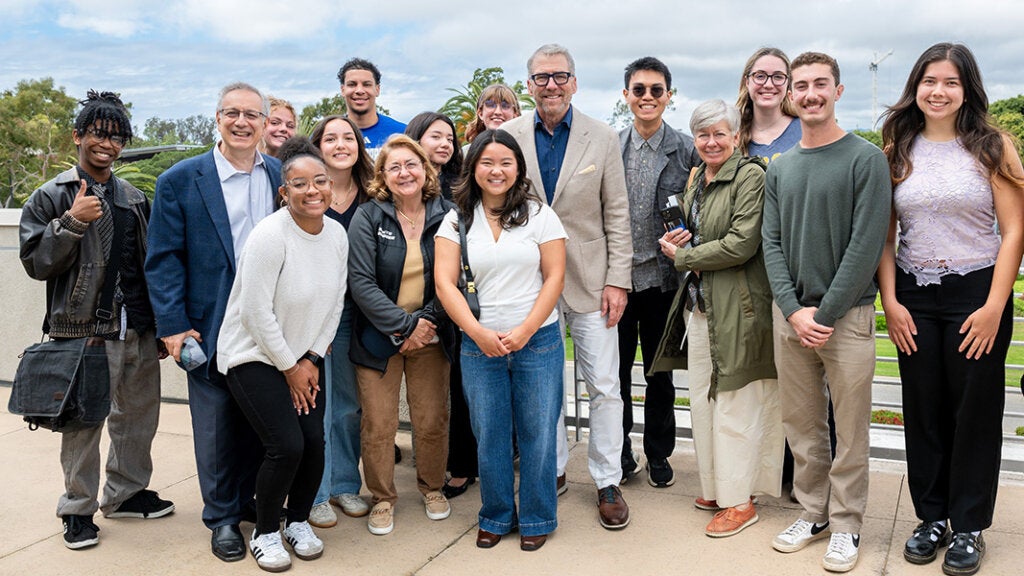
I look forward to visiting other UC campuses soon and am grateful to the students, faculty, staff, and of course, Chancellor Assanis, who made my first visit to UC Santa Barbara a special one.