
UC Press author wins James Beard Award for a fresh look at the tomato
Share This Article
By the time the James Beard Awards ceremony began, Anny Gaul had talked herself out of winning. “I was sure I hadn’t won,” she recalled. “For one thing, I was seated in the middle of a row. I thought surely they must have put the winners near the aisles.”
But she was wrong. Minutes later, the scholar and first-time author accepted the highly prestigious 2026 James Beard Award for Reference, History, and Scholarship for her recent book, “Nile Nightshade: An Egyptian Culinary History of the Tomato” (UC Press, 2025).
“Everything that happened after they announced I’d won was an out-of-body experience,” Gaul said. “I only really believed it afterward because it had been photographed.”
Mapping a country’s culinary imagination
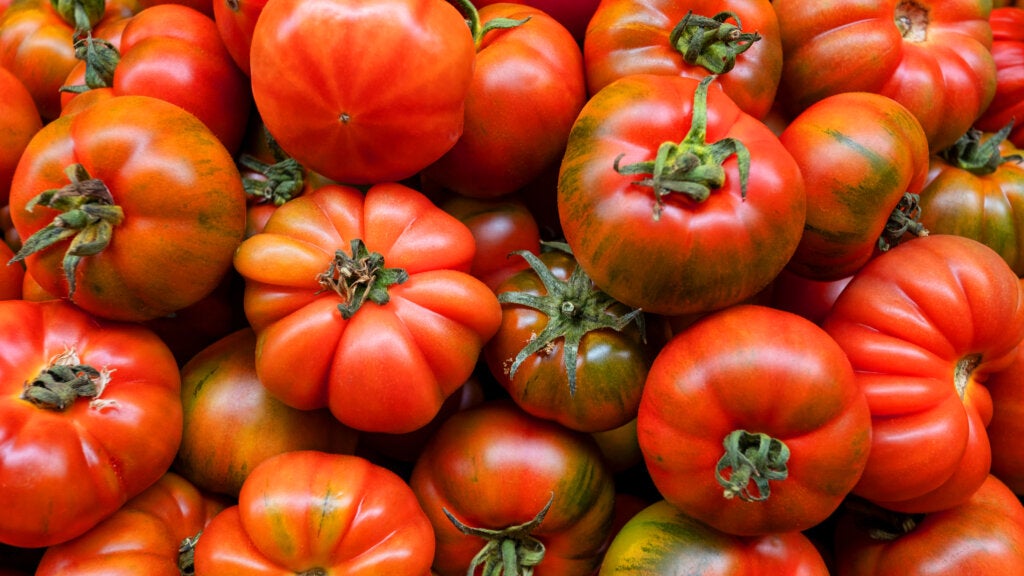
That sense of surprise also sits at the heart of “Nile Nightshade.” The book grew from Gaul’s delight in seeing tomatoes incorporated into the many foods and culinary traditions she encountered during years of research in Egypt.

“The more time I spent in Egypt, the more I saw tomatoes everywhere,” she wrote in the book’s introduction. She found them in Koshari — Egypt’s national dish — topped with tomato sauce and crispy onions, in tiny fried eggplants stuffed with tomatoes, in fish baked with tomato and hot peppers and in a cumin-heavy chicken stew. She learned to baste duck with tomato paste. These dishes all drew from different culinary traditions, but the tomato connected them. “Tomatoes were a perennial throughline that linked street food and home cooking, connecting Egyptian dishes of a half-dozen different origins.”
Gaul, who was already researching the histories of food cultures and cuisines in North Africa, found it remarkable that a relatively new ingredient had become central to both Egypt’s food system and its modern national identity. As she traced the tomato’s journey from fields to markets to home kitchens and into food policy, she began to understand its connection to broader social themes. The tomato, she realized, was “not just as an ingredient but a plant, a commodity and a political icon.”
“Often we study the politics of food systems separately from cuisine and gastronomy,” she said. “But studying both together is essential for our understanding of whose land, whose knowledge, whose labor underpins the cuisines we consume.”
The story also challenges assumptions about what makes something “traditional” or “local.” The tomato was relatively well known in Egypt by the mid-19th century, but by the 20th century, it had become the country’s most important vegetable crop and a cornerstone of what many Egyptians considered traditional home cooking.
“That change happened so swiftly,” Gaul said, through simple “everyday practices like cooking and eating.” These habits, she argued, are powerful: They shape how people understand the communities, cultures and places they identify with. The book also looks beyond familiar geographic categories. A chapter on okra, for example, explores Egypt’s connections to African histories as well as Arab, Middle Eastern and Mediterranean ones.
A melding of minds
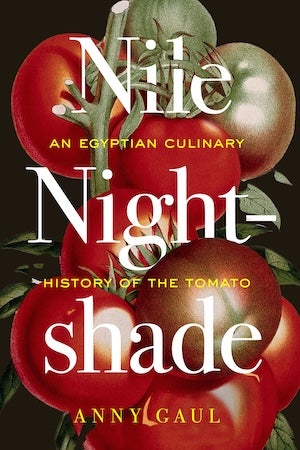
UC Press Executive Editor Niels Hooper saw the book as a natural fit. “This multiple prize-winning book represents many of UC Press’s unique strengths,” he said. “That a first book, and a scholarly book, is winning not only prestigious academic prizes, but the James Beard Award for history, highlights that we can successfully showcase new voices.”
Hooper recognized that “Nile Nightshade” was an ideal blend of research areas in which the Press has deep experience. In addition to being one of the leading publishers of Middle East studies, UC Press was among the first presses to take food studies seriously more than a generation ago with titles such as Gastronomica: The Journal for Food Studies. Hooper also appreciated Gaul’s aim of expanding research around the history of global commodities beyond scholars’ typical focus on Europe and North America.
For Gaul, the UC Press team’s interdisciplinary approach made it an ideal publishing partner. “Working with UC Press was a dream,” she said. “As a scholar whose work doesn’t always fit neatly into disciplinary categories, I really appreciated having the freedom to pursue my topic in the ways that best served the questions I was asking.”
Continuing the conversation
The James Beard Award adds to a growing list of honors and praise for “Nile Nightshade,” including recognition from The Wall Street Journal, The Times Literary Supplement and a host of global award committees. More importantly for Gaul, the book offers readers a new way to look at the food on their plates and the histories behind it.
The award ceremony and surrounding events gave Gaul, who runs in scholarly circles, the novel experience of sharing her perspectives, findings and questions with food industry insiders. “Everyone I met during the awards weekend — chefs, writers, policy folks, wine experts – was so invested and interested in talking about the minutiae of food politics and history and culture from totally different perspectives than I was used to.”
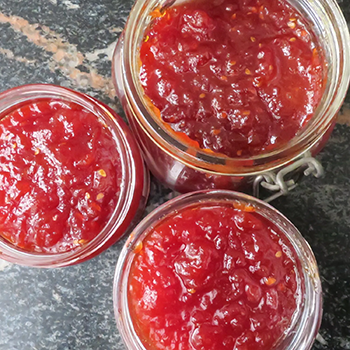
Gaul’s found opportunities to share her knowledge of food culture and history in new ways. In 2024, she partnered with Nour Kamel and Mariam Boctor of the Kusbarra Collective to create a dinner menu in Cairo that explored how the tomato changed Egyptian cuisine. Learn more about this project, and find an excellent recipe for Egyptian-style sweet tomato jam, at Cooking with Gaul.
About UC Press
Based at the Office of the President in Oakland, UC Press publishes 40 journals and about 180-200 books each year across the arts, sciences, humanities and social sciences, with a strong focus on social justice. Learn more about UC Press.