
Nurse educators are key to growing California’s nursing workforce
Share This Article
By UC Health
The future of California’s nursing workforce depends not only on training more nurses, but on preparing the educators who teach them.
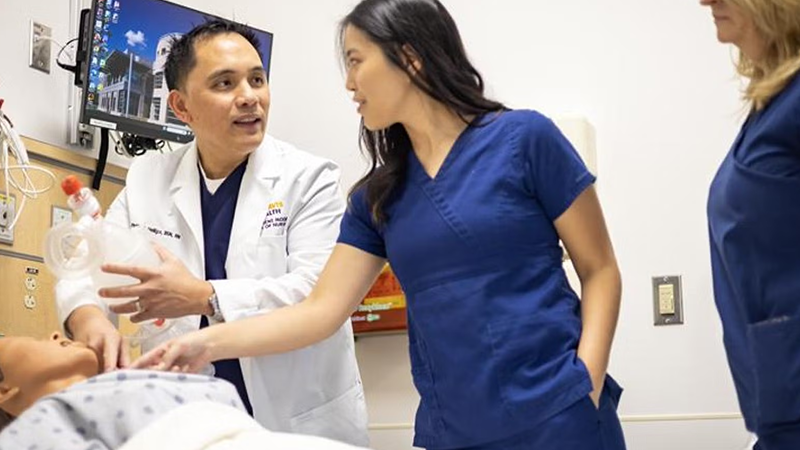
By bridging classroom learning with hands-on clinical experience, nurse educators equip future nurses with the clinical skills and the core elements of patient care — such as communication, compassion and trust — that they’ll need to provide high-quality care to communities.
Demand for nursing programs remains high in California and nationwide
- In the 2024-2025 academic year, more than 80,000 qualified applications to nursing programs nationwide were not accepted.
- The American Association of Colleges of Nursing points to a shortage of nursing faculty and challenges with clinical placement sites as among the primary contributors to nursing program enrollment constraints.
- The nursing faculty shortage is one of the primary contributors to California’s regional nursing workforce shortages
UC is working to address the nursing faculty shortage and broader nursing workforce needs by preparing nurse educators across the four schools of nursing: Betty Irene Moore School of Nursing at UC Davis, UC Irvine Sue & Bill Gross School of Nursing, UCLA Joe C. Wen School of Nursing and UCSF School of Nursing.
As nurse educator Brandy Gleason notes, the nursing shortage isn’t about the lack of interest in nursing programs, but rather a lack of capacity. “If we’re serious about improving access and quality, we have to invest in nursing education in concrete ways. That starts with investing in nursing faculty.”
Nurse educators who are leading the way
In celebration of Nurses’ Month, meet four UC-trained nurse educators who are delivering patient care and serving as clinical instructors and faculty across California’s public higher education systems. From Sacramento to Stanislaus, Los Angeles to Irvine, these educators reflect the cycle of nursing education as they help prepare the next generation of nurses to meet community health needs.
Expanding the nurse education pipeline: Philip Mellijor
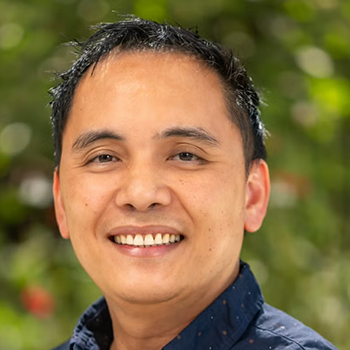
“I was able to see students through their entire rotations and watch them grow into confident nurses. It was really fulfilling.”
For Philip Mellijor (BSN, RN), becoming a nurse educator felt like a natural extension of his work as an emergency room nurse in Roseville.
Last year, Mellijor pursued the Residency in Education, Teaching, and Instruction in Nursing (RETAIN) program at the Betty Irene Moore School of Nursing at UC Davis. The 14-week program helped Mellijor become a clinical instructor, or preceptor — a key role in nursing education where licensed nurses guide students during clinical rotations. He credits the RETAIN program for teaching him how to provide hands-on training and constructive feedback to students.
This fall, in addition to continuing his work as an emergency room nurse, Mellijor will serve as a clinical instructor at Sierra College, a California Community College serving Northern California counties, where he will help students connect classroom learning with real-world care. Given the small-group structure of clinical training, he will precept a cohort of four students across multiple rotations.
Improving access to care in rural communities: Brandy Gleason
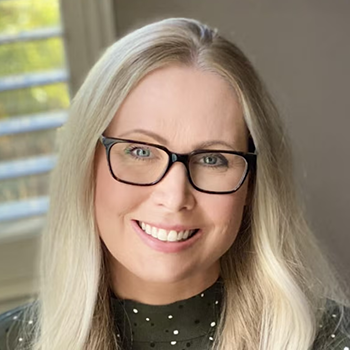
“When providers come from and reflect the communities they serve, the patient outcomes are way better.”
As a psychiatric nurse practitioner serving rural communities, Brandy Gleason (DNP, MHA, RN, PMHNP-BC) brings real-world care into her classroom at CSU Stanislaus.
Based in her hometown of Oakdale in Stanislaus County, Gleason also provides mental health care in rural communities through in-person and telehealth visits. An alum of the UCSF Doctor of Nursing Practice (DNP) program, she integrates resilience training into her teaching and equips students with tools to navigate challenging clinical experiences and sustain long-term practice in a high-need specialty — an approach particularly important for supporting the next generation of mental health professionals.
Her work reflects a deep connection to the region and highlights how nurse educators help address gaps in access, particularly in areas like the Central Valley, where provider shortages and geographic barriers limit care. She emphasizes the importance of training students from the communities they will serve.
A third-generation nurse and former UCSF emergency room nurse, Gleason brings her current clinical experience directly into the classroom at CSU Stanislaus, where she is also the founding director of its Post Graduate Psychiatric Mental Health Nurse Practitioner (PMHNP) program. She notes that teaching grounded in real-world practice helps build trust with students and makes their training more relevant.
Preparing students to support patients and build trust: Paola German
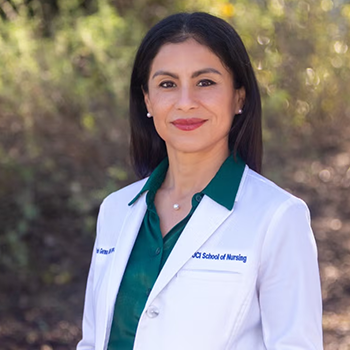
“Care is not just about delivering treatment; it is about educating and empowering patients to make informed decisions. That requires compassion — not just in what we do, but in how we do it.”
Paola German (DNP, APRN, FNP-C) brings her experience as a trauma nurse and nurse practitioner into the classroom, teaching students how to educate patients and build trust.
German earned her DNP from the Sue & Bill Gross School of Nursing at UC Irvine and returned as an assistant professor, teaching in the undergraduate and doctoral programs. She also practices as a nurse practitioner at the UC Irvine Student Health Center. Her area of focus is on vaccines, not only in clinical care but also through community-based and research engagements.
The integration of care, education and human connection is central to her teaching approach. At a recent health fair, German proudly observed her students provide vaccination information to community members, including those unfamiliar with the importance of HPV and influenza immunizations. The way students tailored their communication with empathy and cultural awareness reflected the very principles she instills — reinforcing both their clinical competence and their confidence.
German believes that mentorship is key to encouraging nurses to pursue educator roles, drawing from her own experience at UC Irvine. “It is about helping nurses see the broader path and the greater impact they can have.”
Her background as a U.S. Army surgical technician and a UCI Health emergency department trauma nurse continues to shape her philosophy of care — one grounded in trust, compassion, and service. “I’ve always been drawn to service and community impact,” she says. “As nurses, we are educators at our core, always supporting patients and their families.”
Training students to understand patients within the context of their communities: Kia Skrine Jeffers
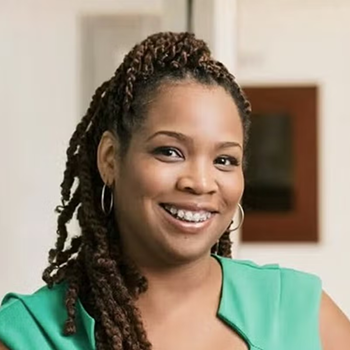
“When you invest in nurses, you’re not just investing in the health of a person or a family. You’re investing in communities, countries and the world… It’s an investment in us all.”
Kia Skrine Jeffers (Ph.D., RN, PHN) draws on her work in public health nursing to help students understand how community and environmental factors shape patient health.
As an assistant professor at the UCLA Joe C. Wen School of Nursing, public health nurse and UCLA alum (MSN, Ph.D.), she emphasizes: “Once someone leaves the hospital, they return home to their communities. That’s where health and long-term recovery often happen. Our work is about supporting people and how they can thrive where they are.”
In her public health nursing course, Skrine Jeffers invites nurses from different public health nursing specialties into her classroom, including those from school-based care, correctional health and disaster settings, to expose students to a broad scope of where nursing care occurs. These real-world perspectives help students understand how environmental, policy and community factors shape health outcomes.
Skrine Jeffers’ role as an educator is also informed by her work with an LA-based safety-net program that provides health care services to low-income residents. “My nursing practice strengthens my research and my teaching, and reminds me of the ‘why,’” Skrine Jeffers notes. “Health and well-being are more than just what’s in [patient] charts…I bring those real-time and real-life stories and experiences to my students in the classroom.”
Additional perspectives from inspiring UC nurse educators
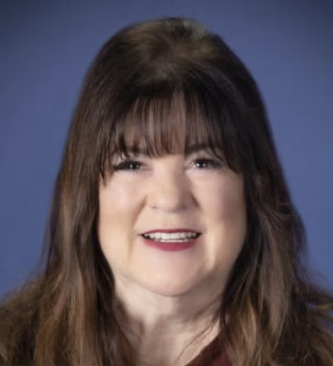
Deb Bakerjian (Ph.D., FAANP) is the RETAIN program director and associate dean of the UC Davis School of Nursing.
“RETAIN pairs experienced nurses with faculty mentors and real classroom and clinical teaching experience, preparing them to step into faculty and clinical instructor roles with confidence. That preparation is critical to building the next generation of nursing educators and expanding how many students we can retain.”
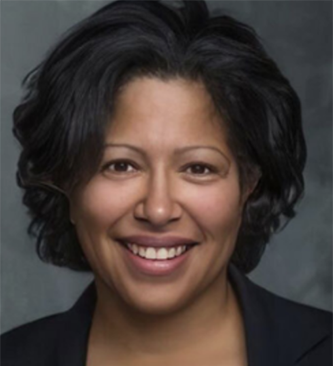
When Angela Coaston (Ph.D., M.S., FNP) became the founding dean of Pepperdine University’s new School of Nursing in July 2024, she knew she was starting on a new adventure, for herself and the school.
Coaston is leading with a people-first approach — she learned the significance of understanding each patient as a whole person through her decades of experience in health care and her education at the UCSF School of Nursing.
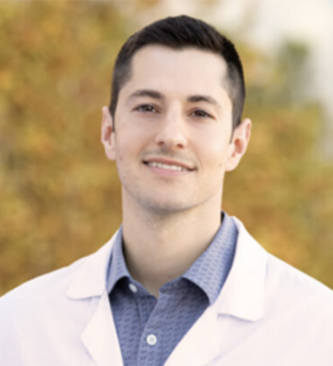
“The NURSE-OC Residency Program has strengthened my ability to provide compassionate, evidence-based care tailored to the needs of our most vulnerable populations through diverse educational opportunities and a strong, supportive network,” says Jason Meola (DNP), UC Irvine Sue and Bill Gross School of Nursing.
“Looking ahead, I hope to share what I’ve learned by precepting future nurse practitioner students and graduates.”
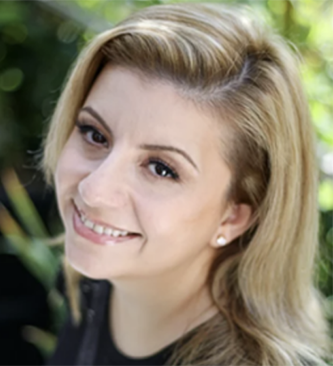
Benissa E. Salem (Ph.D., R.N., MSN, PHN, CNL) is a community-engaged nurse scientist at the UCLA Joe C. Wen School of Nursing, where she focuses on reducing health disparities among people experiencing homelessness and underserved communities. She uses mixed-methods and community-based participatory research to develop, implement and evaluate interventions for populations in need.
About University of California Health
University of California Health comprises six academic health centers, 21 health professional schools, a Global Health Institute and systemwide services that improve the health of patients and the University’s students, faculty and employees. All of UC’s hospitals are ranked among the best in California, and its medical schools and health professional schools are nationally ranked in their respective areas.