
UCLA Dining prepares to set the table for Olympic and Paralympic athletes
Share This Article
By Rebecca Kendall, UCLA
Credit: Courtesy of Bruin Plate
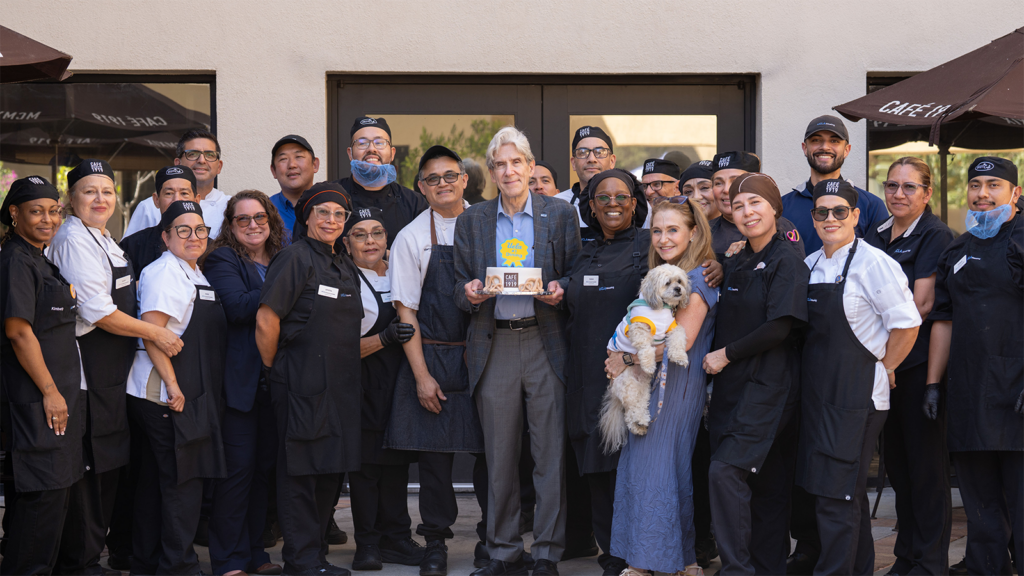
One moment from an early campus tour still stands out in Martin’s mind. As UCLA leaders walked the International Olympic Committee delegation through Covel Commons, the conversation inevitably turned to food.
The group headed to Bruin Plate, where lamb chops were on the menu. The IOC president, impressed and a little suspicious, asked Pete Angelis — then assistant vice chancellor for housing and hospitality — whether the menu had been created especially for the visit.
“They said, ‘You’ve got a beautiful complex, and you’ve got enough rooms for us… but what about feeding the athletes?’” Martin recalled.
“Pete said, ‘Absolutely not. This is what we serve our students and guests,’” Martin said, adding that the president then asked a student directly: “Is this how you normally eat?” The student didn’t hesitate. “Absolutely. This is just another day at Bruin Plate.”
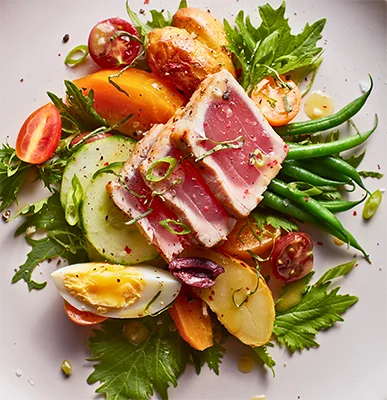
With its focus on healthy eating and sustainability, Bruin Plate is one of four all‑you‑care‑to‑eat dining halls and six boutique grab‑and‑go locations operated by UCLA Dining. Together, they’ve propelled UCLA to the top of the Niche.com ranking of college dining programs — a list based almost entirely on student feedback — for nine of the past 10 years.
Now, UCLA Dining will lead the culinary program for the Athletes’ Village on the Hill, working in close collaboration with the LA28 Organizing Committee and a third party to deliver athlete‑focused nutrition and high‑impact cuisine that supports peak performance.
Watch a video on how the team is preparing
Catering to ‘world-class’ students — and athletes
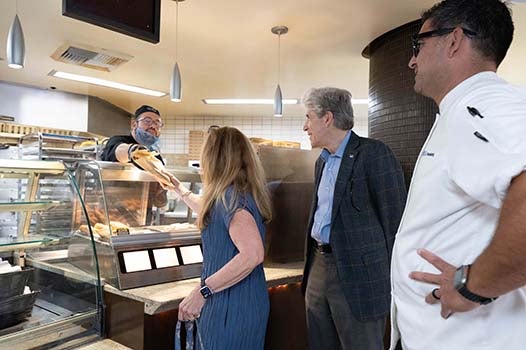
“We serve world‑class students here at UCLA,” said Martin, who is getting ready to serve world-class athletes next.
UCLA Dining expects to prepare and serve meals for more than 11,000 Olympic athletes and 4,000 Paralympic athletes, in addition to coaches and officials. The biggest shift when the athletes arrive will be scale, said Martin. UCLA Dining currently prepares about 33,000 meals a day for 15,500 student residents. During the Games, that number will jump to roughly 60,000 meals every 24 hours, with several dining locations operating around the clock.
Beyond UCLA’s residential dining program, UCLA Dining manages culinary operations at Plateia and UCLA Lake Arrowhead Lodge (both open to the public), as well as the UCLA University Club. The team also services UCLA’s pre-K–12 schools, vending and campus catering operations, including catering for UCLA Meyer and Renee Luskin Conference Center events and producing 600 to 1,400 meals each day for UCLA’s Division 1 student-athletes.
Athletes tend to consume more protein and carbohydrates before and after competition, but the core approach — diverse, culturally informed, nutritionally balanced menus — remains unchanged.
“More so than feeding thousands of people is making sure everybody feels comfortable when they come to UCLA; making sure they have a little piece of home here.”
— UCLA Executive Chef Joey Martin
Though the planning is immense, Martin says UCLA’s foundation is already strong and that preparations for 2028 are well underway.
“We’re looking at the little things — sourcing, storage, vendor readiness,” he said. “We make sure our partners have the numbers they need so they can provide everything from chicken and beef to lettuces, fruits and vegetables.”
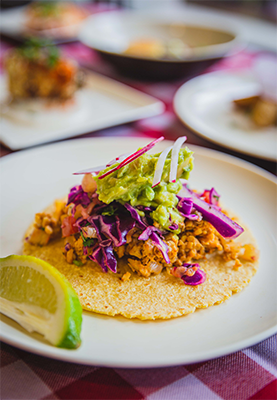
Menu diversity is another priority: UCLA Dining is working closely with LA28 to ensure athletes from every region of the world can find something familiar, comforting and culturally resonant.
“More so than feeding thousands of people is making sure everybody feels comfortable when they come to UCLA. Making sure they have a little piece of home here,” Martin said.
“When [athletes] walk into the dining hall for the first time I want them to forget all the struggles they had either in their events, all the training they’re had in their events, and be able to kind of step away and really just come here to decompress a little bit, eat great food and make sure they know we’re here to take care of them so that they can perform their best.”
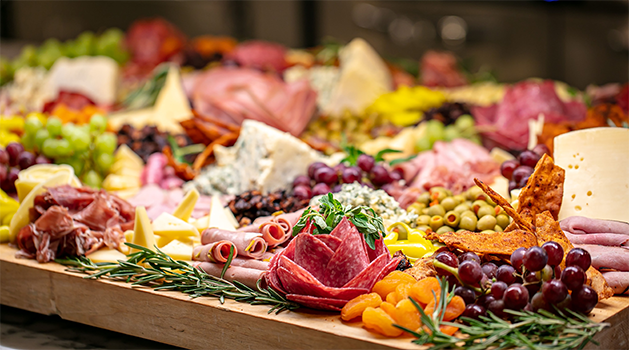
And yes — that includes enjoying a sweet treat from UCLA’s in-house bakery.
“We have to up our game,” Martin said, referring to the team’s goal of creating something that surpasses the famous Paris 2024 chocolate muffin. “We have to take that concept and [add] a little twist of what LA is.”
The team is already experimenting and plans to involve UCLA students in taste‑testing to ensure the final product is something Bruins can be proud of.
For Martin, the significance of hosting the Olympic and Paralympic Village aligns with everything UCLA represents.
“UCLA has always been on the map — great institution, sports, arts, every little thing,” he said. “I think what this opportunity really represents is for UCLA to go for culinary gold and make sure that we do our part during these Games so that the athletes cherish their time here.”