UC Regents celebrate UC’s role in America at 250
Share This Article

On the first day of their July 2026 meeting, the University of California Board of Regents dedicated time to recognize America’s 250th anniversary by celebrating public education and UC’s impact on California and the nation throughout its history.
“One of the country’s greatest achievements has been the creation of academic institutions, including colleges and universities, that have expanded opportunity and the pursuit of happiness,” said External Relations and Communications Chief of Staff Erin Bricker in an inspiring introduction. “There’s no better way to honor our inheritance at 250 than by recommitting ourselves to delivering on the promise of a truly American institution.”
Inviting guest speakers from across UC, the presentation highlighted the university’s contributions to veterans’ health, scientific discovery, agriculture and educational opportunity. It also offered a look at the people behind that work — researchers, educators, entrepreneurs and partners who help turn UC’s public mission into practical benefits for communities across the country.
University of California Health’s transformative impact on veterans and California communities
Credit: Getty Images/SDI Productions
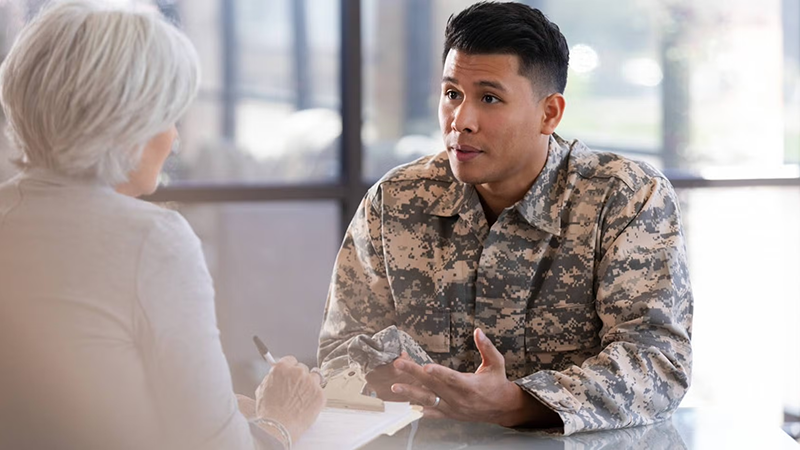
UC’s longstanding partnership with the U.S. Department of Veterans Affairs began more than 80 years ago, when the country needed lifelong care for returning service members and more trained physicians. Today, seven of California’s eight VA medical centers are affiliated with a UC medical school or the UCSF Fresno medical education program.
Dr. Deena Shin McRae, associate vice president for Academic Health Sciences (AHS), University of California Health, shared that “approximately two-thirds of our UC medical students, residents and fellows gain experience at VA facilities.”
The partnership also supports research that benefits veterans and patients everywhere, including work on traumatic brain injury, precision prostate cancer screening and the Million Veteran Program, which links health and genetic information from more than one million veterans. UCLA’s Operation Mend provides another example, offering specialized care and support for veterans with physical injuries and psychological trauma.
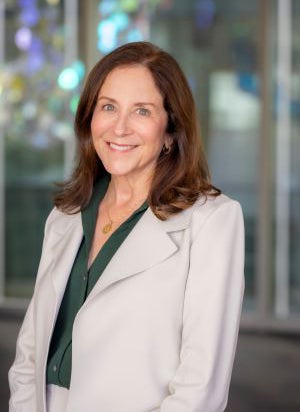
Dr. Susan Murin: Veteran, physician and health care leader
Susan Murin, M.D., joined the meeting to share her experience of this impact. The UC Davis School of Medicine dean began her career as an active-duty U.S. Air Force Medical Corps officer, then spent nearly three decades at UC Davis and the Sacramento VA Medical Center caring for veterans, teaching physicians and advancing research, including lung cancer screening. She shared personal stories about working with VA hospitals at UC Davis, and the transformative impact of the partnership on patients and caregivers.
“I hope my story has helped to showcase the benefits of this partnership to both organizations, to workforce development and, most importantly, to the advancement of medicine and the care of patients,” Dr. Murin said.
Inventing America’s future
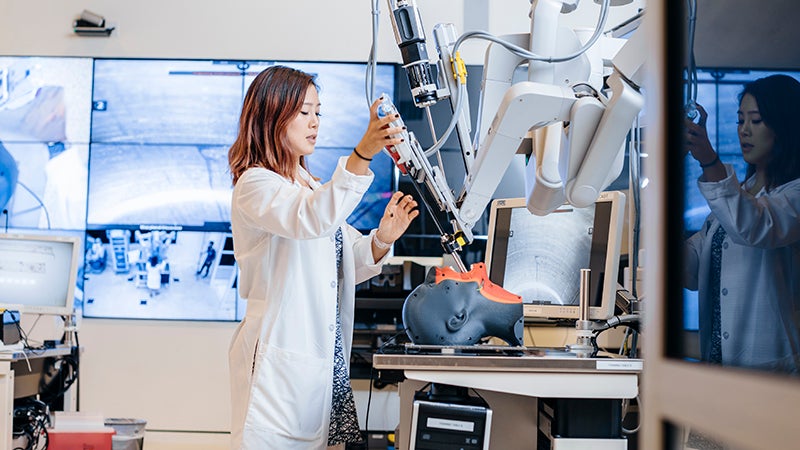
UC discoveries have helped shape modern life, from foundational internet technology to CRISPR gene editing. That tradition continues in artificial intelligence, biotechnology, engineering, quantum science and other fields that will influence how people live, work and receive care in the years ahead.
“The University of California has long been one of America’s greatest engines of innovation,” shared UC Provost and Executive Vice President of Academic Affairs Katherine S. Newman, Ph.D., while introducing UC’s scientific research impact. “Many of the discoveries that have transformed modern life began on our campuses.” The university also helps discoveries move beyond the laboratory. Innovation hubs at several campuses provide laboratory space, business guidance, mentors and industry connections. Together, these programs help researchers turn promising ideas into companies, jobs, treatments and technologies.
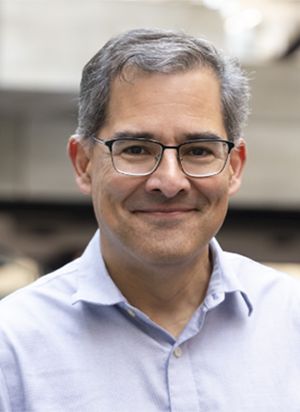
David Schaffer: Bioengineering innovator and entrepreneur
David Schaffer, Ph.D., a UC Berkeley professor and director of the California Institute for Quantitative Biosciences (QB3) and Bakar Labs, works at the intersection of research and entrepreneurship. His gene and stem-cell therapy research has advanced toward clinical use, while his leadership helps other UC scientists find the support needed to develop discoveries into real-world solutions.
“We have a series of programs that help educate these young entrepreneurs and speed them along in their journey, all the way from being academic investigators, to brand-new entrepreneurs, to more seasoned CEOs, CISOs and CTOs, who then take those technologies into clinical development and develop drugs that can help patients in everything from Parkinson’s to Alzheimer’s to Type 1 diabetes,” Schaffer said.
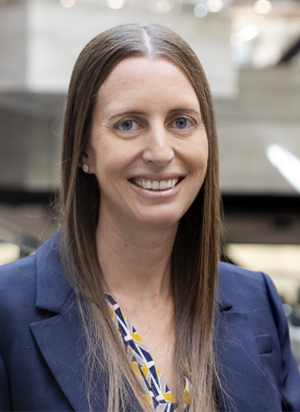
Credit: Vivere Oncotherapies
Melissa Kotterman: Alumna, mentor and entrepreneur
Melissa Kotterman, Ph.D., represents the path from UC research to a growing company. After completing doctoral work in Schaffer’s laboratory, she helped build biotechnology ventures and now leads Vivere Oncotherapies, which is developing a platform to help the immune system recognize and attack tumors.
“As a current Bakar Labs tenant, cofounder, executive and advisor to first-time founders through the QB3 early-stage mentorship program, I’ve had the opportunity to both contribute to and benefit from the world-class entrepreneurial system that UC is building,” Kotterman said.
Supporting the farmers who feed the nation

California produces more than 400 agricultural commodities and supplies over one-third of the country’s vegetables and two-thirds of its fruits and nuts. UC has supported that work for more than 150 years, helping farmers and ranchers produce food more efficiently, safely and sustainably.
Through UC Agriculture and Natural Resources (UC ANR), Cooperative Extension experts work in every California county. They help producers manage water and fertilizer, respond to pests and disease, and adopt tools such as artificial intelligence and automation. UC-developed resources give growers data they can use to make more precise irrigation and nutrient decisions, reduce costs and limit environmental impacts.
“UC’s partnership is critical to growers, ranchers and ultimately consumers, in California and beyond,” said Darren Haver, Ph.D., associate vice president of research and extension at UC ANR, in introducing his organization’s role. “Our academics, specialists and faculty based at UC campuses and advisors based in all 58 counties engage in leading-edge research, often in partnership with California producers.”
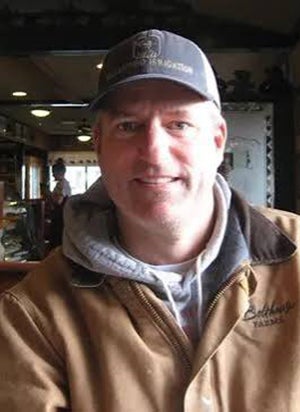
Mark Mason: Agricultural technology pioneer
Mark Mason spoke next, bringing a farmer’s perspective to the conversation. As agricultural manager for Nature’s Reward/Huntington Farms — a fourth-generation family farm in the Salinas Valley — he has more than 30 years of experience in crop production. He has worked closely with UC researchers for the past 10 years to reduce the use of pesticides, water and fertilizer through smart spraying systems, decision-making tools and other resources designed for use in the field.
“We cannot stock grocery stores around the world without science-based experiments,” said Mason.
He shared personal examples of working with UC ANR farm advisors, including how their partnerships have helped his farm and other local growers effectively reduce pesticide use and disease, saving millions of dollars.
“UC farm advisors are so respected — much more so than private researchers we deal with,” Mason said. “We need this group to help with the major threats that come into California ag, and I could not imagine not partnering with the farm advisors… they’re critical.”
Expanding the promise of opportunity
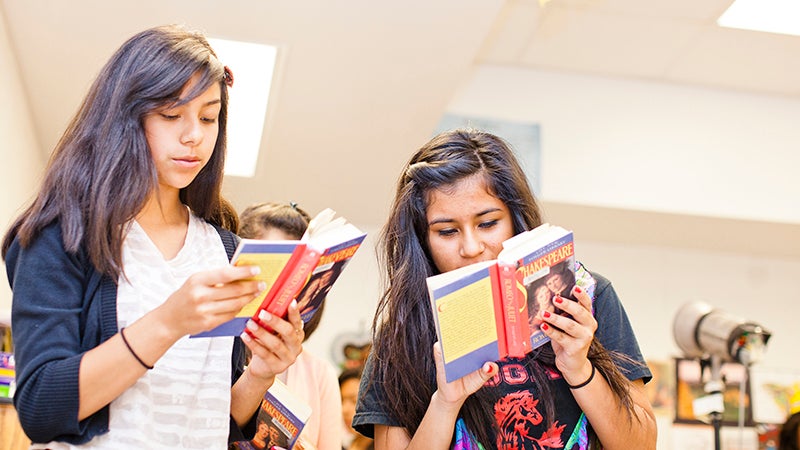
UC educates more than 300,000 students each year on its 10 campuses and six academic health centers. More than one-third of UC undergraduates are the first in their families to attend college and more than one-fourth enter UC as community college transfer students.
The university’s UC’s impact, however, begins in California classrooms and communities, well before enrollment. Initiatives such as the Early Academic Outreach Program help young people prepare for college and envision themselves at UC. The Transfer Admission Guarantee program, academic advising, financial aid and partnerships with California Community Colleges enable students to earn degrees that expand their career options and economic mobility.
“For over 150 years, the University of California has served as one of the most powerful engines of social mobility,” shared Provost Newman. “Its commitment to access, to affordability, to academic excellence and to public service is really unparalleled in the United States.”

Tammeil Gilkerson: Alumna and advocate for educational opportunity
Tammeil Gilkerson, Ed.D., experienced UC’s outreach firsthand. UC Berkeley’s Early Academic Outreach Program introduced her to college while she was in middle school. She later graduated from UC Berkeley and built a career around student access and success; she is currently chancellor of the Peralta Community College District.
Gilkerson shared her appreciation for UC’s pivotal role in her personal, academic and future development, particularly those who saw her potential — whether in person or through her applications — and allowed her to succeed. “Before I ever became a UC student, UC helped me believe that I could be one. Somebody saw the possibility in me before I fully believed that I belonged,” she said. “That may be the greatest promise of opportunity; not simply opening a door, but helping someone see that they belong on the other side of it.”
Help build what comes next
As America marks 250 years, join UC in celebrating our shared achievements while staying focused on what comes next. Join us!
- Use UC’s America 250 Zoom backgrounds at virtual meetings and events
- Visit UC’s America 250 website to discover more stories and learn how you can support the university through advocacy efforts
- Watch UC’s commemorative 250 video
- Learn five examples of how UC shapes America