Two UC campuses, one shared mission: UC’s newest PRIME program expands physician training to the Central Coast
Share This Article
By University of California Health
From Santa Cruz to Ventura, California’s Central Coast has long faced shortages of doctors, clinics and hospitals, leaving many community members, including thousands of farmworkers, with limited access to care.
By 2030, the state will have 11.5% fewer physicians than needed, with the Central Coast and Central Valley regions facing an even more severe 18.7% shortfall in primary care doctors — the worst gap in the state.
UC’s newest PRIME program is designed to help change that.
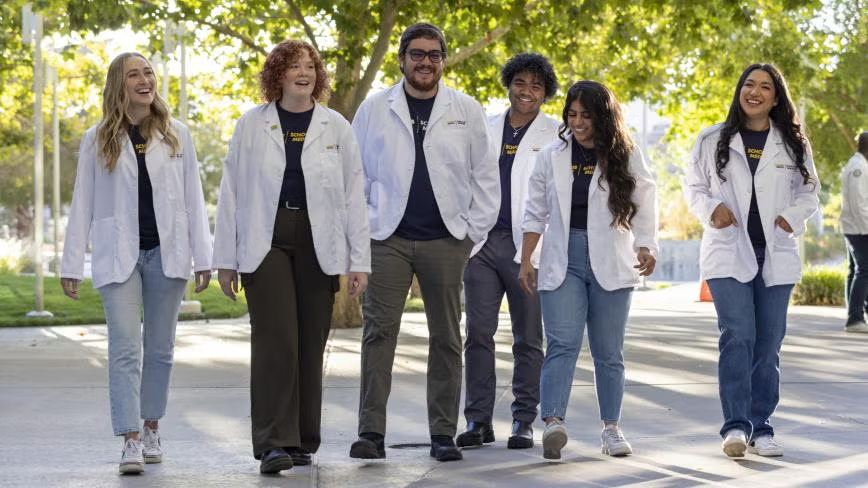
PRIME Central Coast, a partnership between UC Davis and UC Santa Cruz, began admitting its inaugural class of medical students in October. Students accepted into the cohort are expected to begin their studies in July 2027, preparing to serve communities across California’s Central Coast.
A partnership built on existing pathways
PRIME Central Coast builds on UC Davis School of Medicine’s two decades of physician workforce development programs. Across its PRIME and other Community Health Scholars Programs, UC Davis has demonstrated the impact of mission-driven medical education: 70% of Community Health Scholars graduates practice in underserved communities or safety net settings.
“The UC Davis School of Medicine is eager to train students from the Central Coast who are committed to returning to their communities to address physician workforce shortages and improve the health of the people they serve,” said Melody Tran-Reina, M.D., Associate Dean of Workforce Pathways and Collaboratives at UC Davis.
PRIME Central Coast is the latest effort by UC Santa Cruz to help address California’s growing health care workforce shortage through undergraduate and graduate-level curriculum. UC Santa Cruz’s Global and Community Health undergraduate majors prepare students for a wide range of health care careers. Created in 2022, the program now supports over 600 students. In 2024, UC Santa Cruz also launched a pre-med postbaccalaureate pathway program, designed to support students by enhancing their academic skills, guiding their professional goals and strengthening their medical school applications.
PRIME Central Coast is an important step toward expanding medical education in the region. UC Santa Cruz’s affiliation with UC Davis as part of PRIME Central Coast could support its longer-term goal of becoming a branch campus of the UC Davis School of Medicine, even before an independently accredited medical school is established in the region.
Building on – and investing in— the UC PRIME model
PRIME Central Coast builds on the successful UC PRIME model, which supplements standard medical training with additional curriculum tailored to meet the health needs of the surrounding community. The 11 PRIME programs are open to all eligible applicants whose career interests align with the program missions. A majority of UC PRIME graduates go on to do their residencies in primary care and other health workforce shortage specialties, where they help expand access to care and bring a deeper understanding of local needs.
PRIME Central Coast was launched in 2025 with $1.5 million in one-time state funding and received an additional $3.3 million in the 2026-27 California budget to support hiring and professional development opportunities for future Central Coast physicians who will help build and teach in the program.
“UC Santa Cruz is committed to improving the health of our region and we deeply appreciate the support of the legislature and governor,” said UC Santa Cruz Chancellor Cynthia Larive about the budget support, led in large part by Senator John Laird (D-Santa Cruz). “Sen. John Laird’s advocacy and support is helping to change the trajectory of health care in our region. PRIME Central Coast will train talented students from our own communities and prepare them to serve those communities as physicians.”
A generation of physicians connected to the region’s health needs
For students from the region, PRIME Central Coast represents more than a medical education program. It creates a way to help retain more of the region’s talent by developing medical training opportunities in communities where doctors are most needed.
Michael Parr, a second-year UC Davis School of Medicine student who is part of the Rural PRIME program and grew up in Salinas, said a program like PRIME Central Coast can help local students who may not have early exposure to medical careers or mentors.
“To be able to train as physicians and come back to the area to treat people and understand their language or their struggles, and build that trust within the community, is a huge benefit for everyone,” Parr said.
Applying to PRIME Central Coast and what to expect
- Applicants interested in PRIME Central Coast apply to the UC Davis School of Medicine in Sacramento. As part of the secondary application, they then indicate their interest in PRIME Central Coast.
- As in other medical programs, PRIME Central Coast students will focus on coursework during the first half of medical school, while building a foundation in patient care. In the second half, they will gain clinical experience and provide patient care.
- PRIME Central Coast students will regularly return to the Central Coast for clinical rotations under the supervision of physicians at local hospitals and clinics.
Learn more about applying to the newest PRIME program
About University of California Health
University of California Health comprises six academic health centers, 21 health professional schools and systemwide services that improve the health of patients and the University’s students, faculty and employees. All of UC’s hospitals are ranked among the best in California and its health professional schools are nationally ranked in their respective areas.