
Five stories and videos from the latest UC research
Share This Article

UC pancreatic cancer breakthrough receives a literal standing ovation
Pancreatic cancer is notoriously hard to detect, and with a five-year survival rate of just 13%, it’s the third-leading cause of cancer deaths in the United States. The American Cancer Society estimates 67,000 people will be diagnosed in the U.S. this year.
But thanks to UC research, new hope is here: An international study co-led by UCLA found that the drug daraxonrasib significantly extended overall survival for patients with previously treated metastatic pancreatic cancer. Basic scientific research conducted at UCSF, and funded by the federal government, laid the groundwork for a better understanding of the cancer-causing mutation that the drug targets.
One pancreatic cancer expert shared that when he heard the news, “Having treated pancreatic cancer for 16 years, I actually started crying in the clinic.”
Protecting whales from ships with help from AI

Thanks to researchers from UC Santa Barbara’s Benioff Ocean Science Laboratory (BOSL), hungry gray whales can breathe a little easier this year. They recently released an AI-powered system that uses thermal imaging to detect whales’ heat signatures and “blows”, and then alerts nearby mariners to re-route or reduce their speeds to avoid hitting them.
“What gives me hope is seeing how all the right partners in the Bay Area community have come together to do something. This new system will save whales’ lives. We are all proud of this,” said BOSL Director Douglas McCauley.
New study shows popular GLP-1 weight loss drug may slow biological aging
Beyond the widespread attention GLP-1 drugs are receiving for treating obesity, lowering blood sugar and decreasing the risk of cardiovascular disease, emerging research is investigating their other potential impacts — including their effects on aging.
Now, a new study provides the first randomized, placebo-controlled clinical evidence that semaglutide, a widely used GLP-1 drug, slows down the accumulation of biological aging markers in the DNA of adults with HIV. While the study focused on people with HIV‑associated lipohypertrophy, it may offer lessons for the wider population.
“Many of the biological processes we study in HIV are also central to aging in the general population,” said first author Michael Corley, Ph.D., associate professor at UC San Diego School of Medicine and the Stein Institute for Research on Aging.
This abalone likes long walks on the beach
A 600-square-foot UC lab holds more white abalone than you’ll find in the wild. Scientists are working to change that — starting with the love life of an abalone named Myrtle. Explore the unique work taking place at the UC Davis Bodega Marine Laboratory in this charming video from UC’s award-winning Fig. 1 video series:
Reducing breast cancer screening time by half for high-risk women
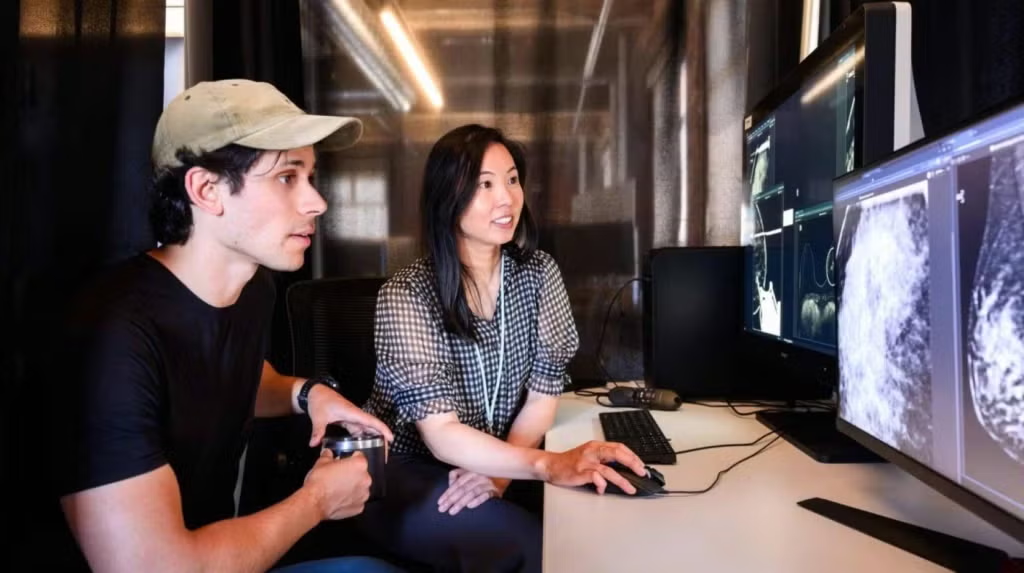
Women with abnormal mammograms often have to wait for weeks to find out whether they have breast cancer.
Now, researchers at UC San Francisco and UC Berkeley have found a way to reduce wait times and worry by using AI to quickly identify those most likely to have the disease. Once these patients are triaged, they can go through the diagnostic process immediately — from imaging to evaluation and sometimes even biopsy — in a single day.
“This is really an exciting time,” said Maggie Chung, M.D., the first author of the study. “This moves us closer to personalized care, where we can tailor a plan so that each patient gets the right intervention at the right time.”
To catch up with more must-read research from throughout UC, visit the UC Newsroom!