
‘Age-Friendly’ UC campuses
Share This Article
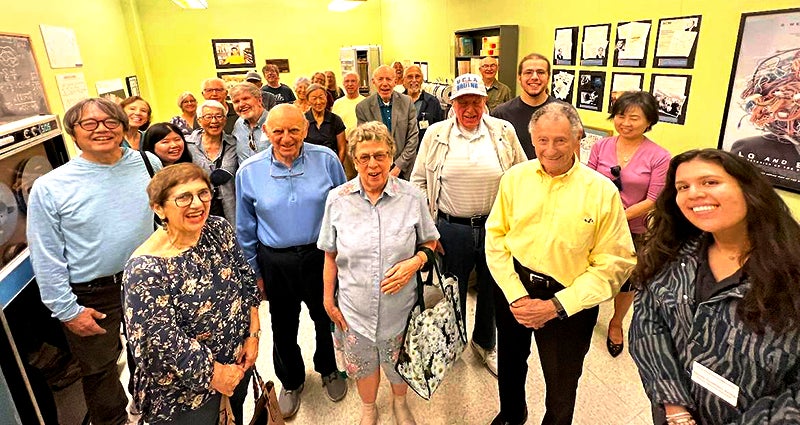
Two UC campuses are working to make sure their communities engage and serve people at every stage of life.
UCLA and UC Berkeley are the first and second UC campuses to join the Age-Friendly University Global Network (AFU-GN), a consortium of higher education institutions committed to enhancing the lives of older adults through education, research, and community engagement. UCLA earned the designation in 2018; Berkeley followed with its official recognition on February 4, 2026.
UCLA’s continuing commitment
As Ayesha Dixon, senior director of the UCLA Emeriti/Retirees Relations Center, put it, UCLA’s location gives it a distinct advantage: “UCLA is uniquely located at the center of one of the most diverse and influential global megacities, where we have the opportunity for active participation in the age-friendly movement.”
This year, UCLA expanded on its 2018 designation by launching a new website, agefriendly.ucla.edu, and convening a cross-disciplinary task force that brings together emeriti faculty, staff, retirees, and students.
UCLA’s new website connects visitors to the UCLA Aging Cluster, which unites researchers across disciplines who study aging; the UCLA Longevity Center, known for its work on healthy aging; UCLA Extension courses for lifelong learners; and a running showcase of research on longevity, caregiving, and social connection in later life.
UCLA’s task force works to expand intergenerational programs that simultaneously broaden the experiences of young people and reduce social isolation and ensure equity for older members of the UCLA community — building on the volunteer, advocacy and mentorship programs already in place through UCLA’s Emeriti/Retirees Relations Center.
Dixon sees value in these programs for everyone involved. “The age-friendly mission is to be an educational resource and guide for individuals to grow older with meaning and purpose,” she said, “but it’s also about helping the community recognize the value of every age group.”
See UCLA expands its commitment to becoming a more ‘age-friendly’ campus to learn more.
Berkeley: Years of groundwork for a milestone achievement
UC Berkeley’s recognition on February 4, 2026, was the product of sustained work and long-term commitment.
The designation was co-led by Cary Sweeney, director of the UC Berkeley Retirement Center, and Susan Hoffman, assistant dean of Lifelong Learning and director of the Osher Lifelong Learning Institute (OLLI) at Berkeley. Sweeney celebrated their achievement: “I’m thrilled to celebrate UC Berkeley’s Age-Friendly University endorsement. It embraces aging and retirement as a time of continued purpose, connection, and contribution.”
Chancellor Rich Lyons and Executive Vice Chancellor and Provost Ben Hermalin tied the designation directly to Berkeley’s Principles of Community, which call for an environment where people at every stage of life can stay engaged and contribute meaningfully.
The success of UC Berkeley’s application reflects years of initiatives grounded in age-friendly principles, from the Emeriti Academy to the multi-year “Age Equity for All” effort with UC Berkeley retirees, staff, students and community members.
Learn more about UC Berkeley Age-Friendly University (AFU) on the UC Berkeley Retirement Center website.
A shared commitment to lifelong learning
UCLA and UC Berkeley — along with UC retiree centers across the system — are living proof that a university’s responsibility and value to the community extend well past graduation. As UCLA’s initiative puts it, the goal is a campus that is “vibrant, inclusive, and full of lifelong learning” — at every age.