
UC People: Anna Levitt, connecting sustainability and health
Share This Article
By Sarah Cronin, UCSF
A conversation with Anna Levitt, technical director of Sustainability at UCSF
What is your role in Campus Life Services (CLS) and how does that translate to your day-to-day work?
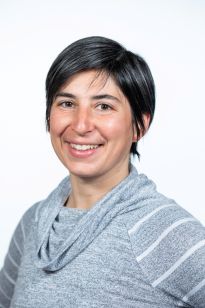
Good question, as this is a new role for UCSF. I have a half-campus, half-health appointment, and my campus title is technical director of Sustainability. My primary goal is to advance decarbonization while maintaining what we absolutely need — energy reliability and resiliency.
What does energy resiliency mean in the context of UCSF?
On campus, we have critical research facilities that must maintain power at all times, or critically important research could be compromised. On the health side, we require energy for patient care around the clock. Energy resiliency means ensuring we can continue to deliver energy to the most critical needs at all times and that we have backup plans and systems in place in the event of a power deficit, like the major PG&E outage last month.
How long have you worked at UC?
I’ve been working in the UC system since 2009, when I began working in energy management at UC San Diego. I started at UCSF in late 2019 as an energy manager.
You created the first energy management program at UC San Diego Health. What did that experience teach you?
It’s crucial to have strong partnerships between sustainability, facilities, and design and construction teams, as well as between campus and health entities, because no one can do all the work alone.
It’s also critical to recognize and share that the work we do in sustainability is part of our core mission of advancing health worldwide. Sustainability and climate action work is actually preventive and public health care at the earliest stages.
What’s your favorite part of your job?
I feel great about being able to impact long-term decisions that will shape how things work and are set up for decades to come. My team influences how hospitals are designed and how building infrastructure is set up. That feels very important and impactful.
The other thing that comes to mind is that I believe deeply and personally in the mission at UCSF, knowing that all the work we do is in service of caring for patients and keeping people healthy around the world.
Can you share any recent long-term planning initiatives that you’ve worked on?
The entire decarbonization program — which is in its infancy but starting to move forward significantly — and its connection to all the new construction.
For example, in part through my participation, the new Helen Diller Hospital at Parnassus Heights will be nearly carbon-free from opening day. It will also tee us up for a more sustainable future in Parnassus by taking the initial steps toward a campuswide hot water piping loop — a key component of our future decarbonized system.
Similarly, the new hospital building at Benioff Children’s Hospital in Oakland incorporates design elements that will help us decarbonize the existing hospital in the future.
You’re a licensed mechanical engineer. At what stage in your career did sustainability become something that you’re passionate about?
I was studying mechanical engineering in college during the Second Gulf War. I knew that access to oil was a major point of contention between countries, and I wondered how my skills and interests in school and in my profession could relate to that. My senior-year college project was on renewable energy. From there, I went into energy work as a career.
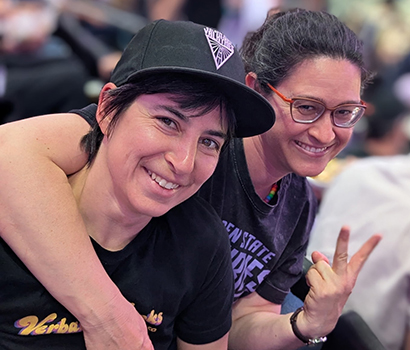
Also, my wife is a doctor and worked at a public hospital in Mozambique for a year. During that time, I had the opportunity to travel there and contribute to an infection-control project for the facilities. That was my first job in health care.
What was your experience in Mozambique like? Did it impact your decision to work in the health care space?
The big thing for me with travel in general is seeing and feeling that everyone across the world ultimately wants and seeks the same things — to take care of their loved ones and be safe. That’s what I saw in the hospital in Maputo: People were working crazy hard to take care of each other.
My wife, in general, has inspired my career path. Seeing how profoundly important her day-to-day work is made me interested in being closer to the health care space. Through her time in hospitals, particularly with patients at the end of their lives, she’s gained clarity on what’s most important, what people care about at the end. That lesson carries through everything. It’s a good reminder of where to really focus.
Can you share a little bit about where you grew up?
I grew up in Dearborn Heights, Michigan, which is a very near suburb of Detroit. It’s the car capital of the world, the headquarters of Ford Motor Company. My family was unusual in that we had nothing to do with the auto industry; my parents were professors. My mom is an anthropologist, and my dad, at different times in his life, taught business and education.
What do you like to do when you’re not working?
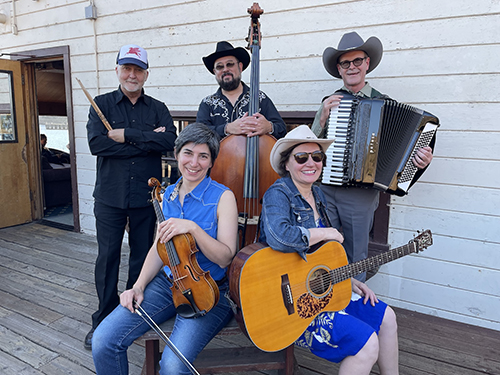
My wife and two kids, who are 5 and 9, keep me very busy. Music is my number one passion aside from family. I sing and play the fiddle and guitar. I’m in a band called The Vivants and wrote our track, “Mama Put the Frango On,” about attending a music festival in Zavala, Mozambique, with the musician and physician Noe Massango.
Do you have any advice for new colleagues?
The big thing for me — and sometimes I have to remind myself to take my own advice — is to network heavily. Talk to as many people as you can and understand how other departments work and what they’re focused on. Things work better when people are talking to each other, and we don’t necessarily have that delivered to us. One-on-one conversations work really well for me, so I ask folks to have a coffee or lunch.
The people who do the best job are the ones who manifest it themselves, so don’t be shy about reaching out. Colleagues are often interested in providing formal or informal mentorship.
Relatedly, there are no stupid questions. If you don’t understand something, ask. Chances are you’re going to help somebody else.